Why creosote has to come out
Wood smoke cools as it rises, and the tarry residue it deposits on the flue walls is creosote. It burns, and a thick enough layer can catch fire inside the chimney. Well before that point, the buildup narrows the flue, so the fire draws worse and more smoke rolls back into the room.
What happens on a sweep visit
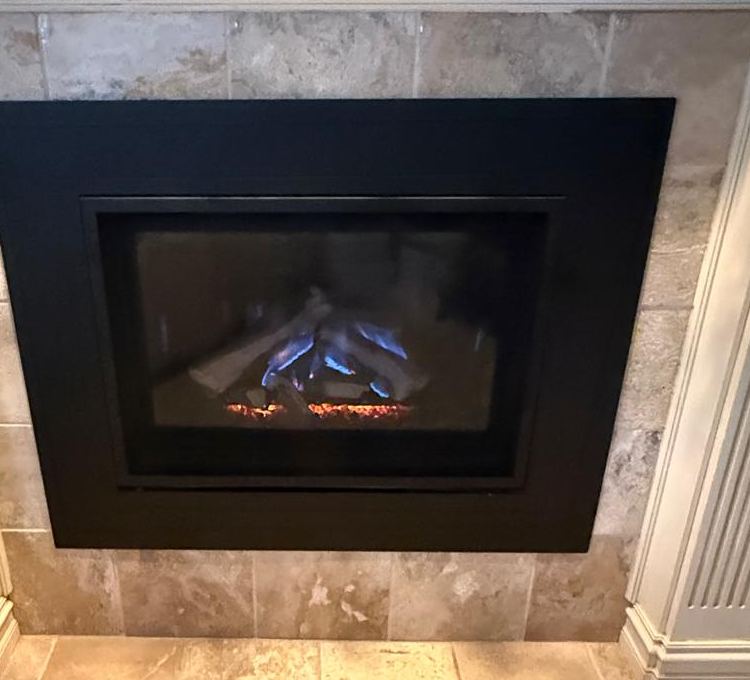
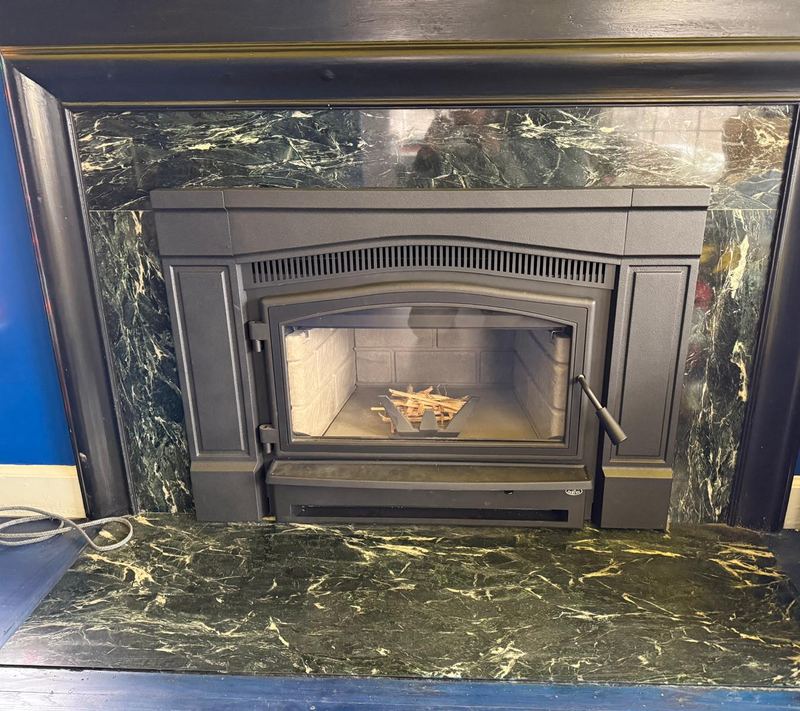
We start inside. Drop cloths go down from the hearth to the doorway, and a vacuum runs at the fireplace opening the whole time, so the dust ends up in the machine instead of your living room.
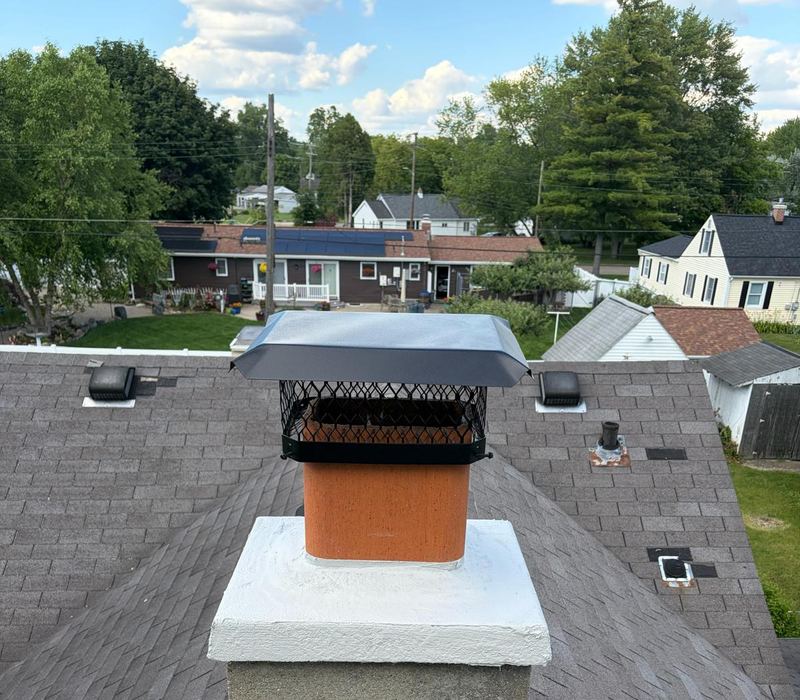
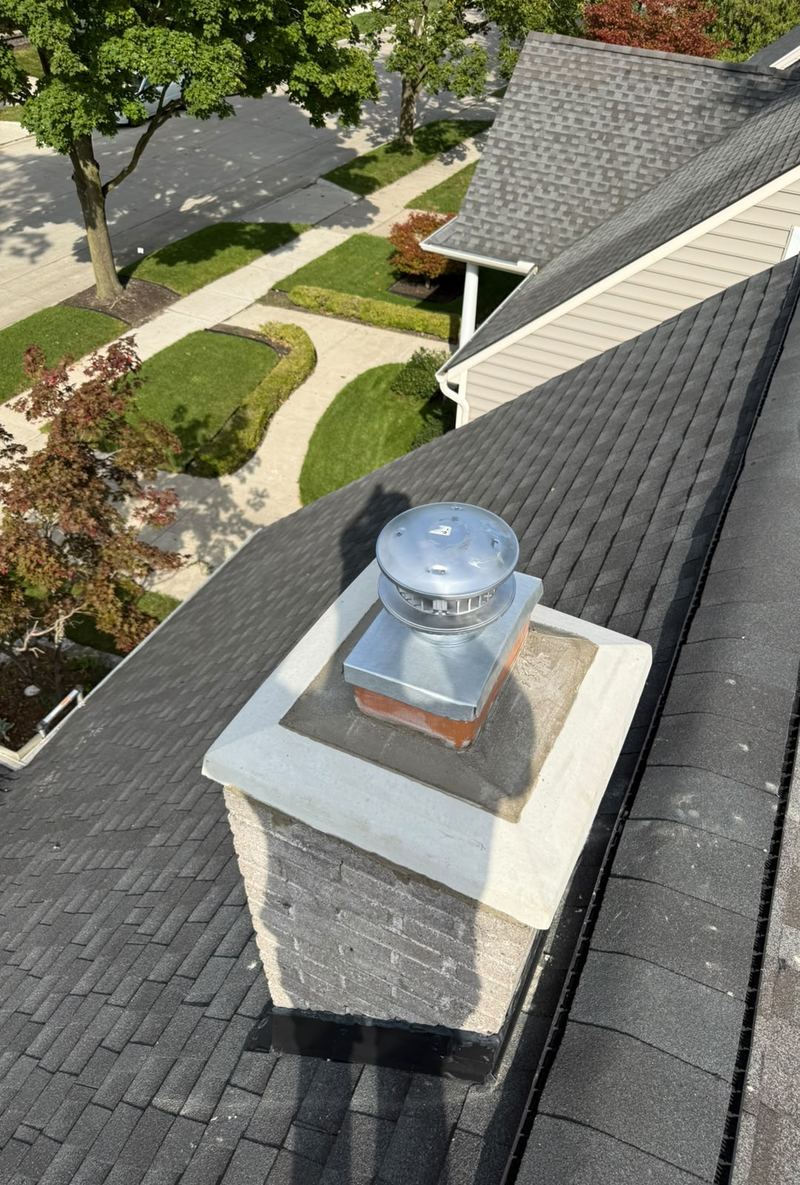
The flue is brushed from below, from the roof, or both, depending on how the chimney is built and what sits on top of it. Afterward we look over the firebox, damper and smoke chamber, check the cap and crown, and tell you what we found.
How often to sweep
The fire safety standard most inspectors work from, NFPA 211, calls for chimneys to be inspected once a year and cleaned whenever they need it. For a household that burns wood through most of a Michigan winter, that usually means a sweep every year. If you only light a few fires a season, an inspection will show whether the sweep can wait.
Signs it's time
- The last sweep was a year or more ago and you burn wood most evenings in winter.
- The fireplace smells sour or smoky in summer, especially after rain.
- Smoke drifts into the room when you light a fire.
- Black flakes fall into the firebox or onto the damper.
- You just moved in and the sweep history is a mystery.
What can change the price
Most sweeps come in at the flat $349. Two things can add to it. A cap that's screwed down, banded on or rusted in place costs $50 more to take off and put back. And creosote that has hardened into a glaze needs its own treatment, described below.
Glazed creosote
Most creosote brushes right out. When fires burn cool for years, it can harden into a shiny, tar-like coating that a brush won't move. That takes a separate treatment, often called PCR, which we price after seeing the flue. It usually lands between $1,800 and $4,000.
Before we come
Let the fireplace go cold for a day so we can work in the firebox, and clear a path to it. Anything fragile on the mantel is safer moved before we start.