Why the top goes first
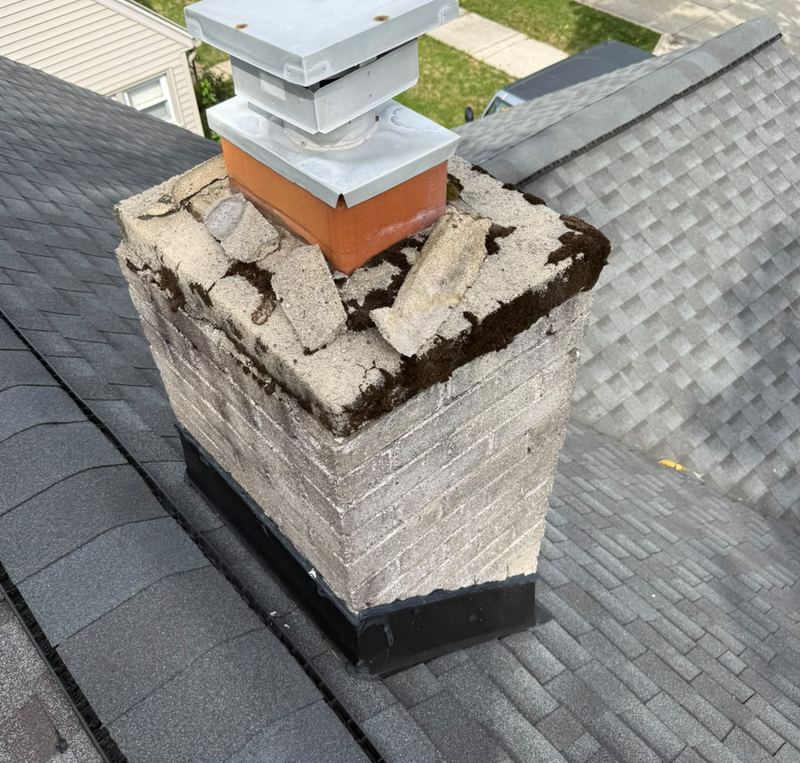
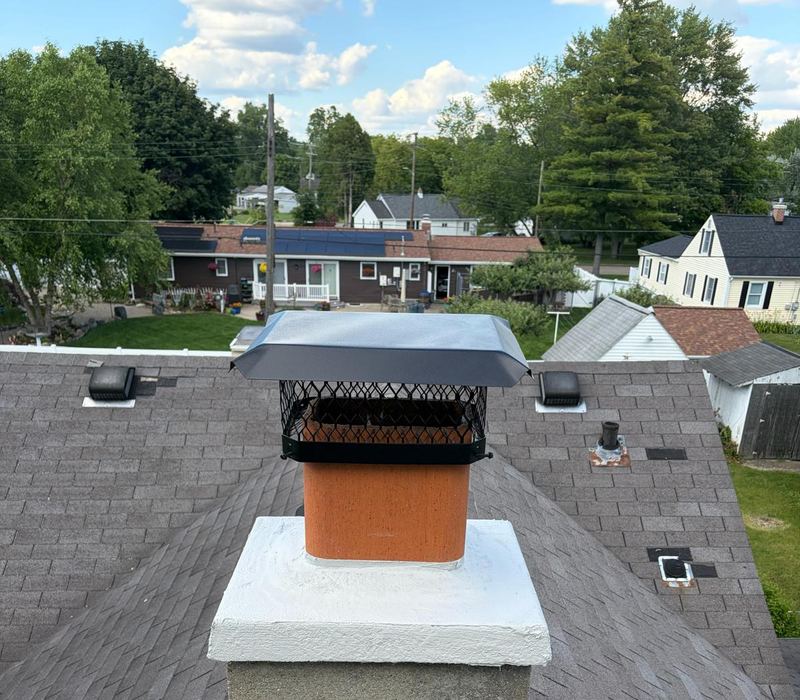
The part of a chimney above the roof gets rained on from every side, dries slowly, and has no heat from the house to keep it above freezing. That's why mortar near the top usually fails years before the joints lower down.
Tuckpointing
We grind the old mortar out of the joints to an even depth, clean them, and pack in new mortar mixed to match the rest of the chimney as closely as we can. Most chimneys don't need every joint redone, so we price only the areas that are actually worn.
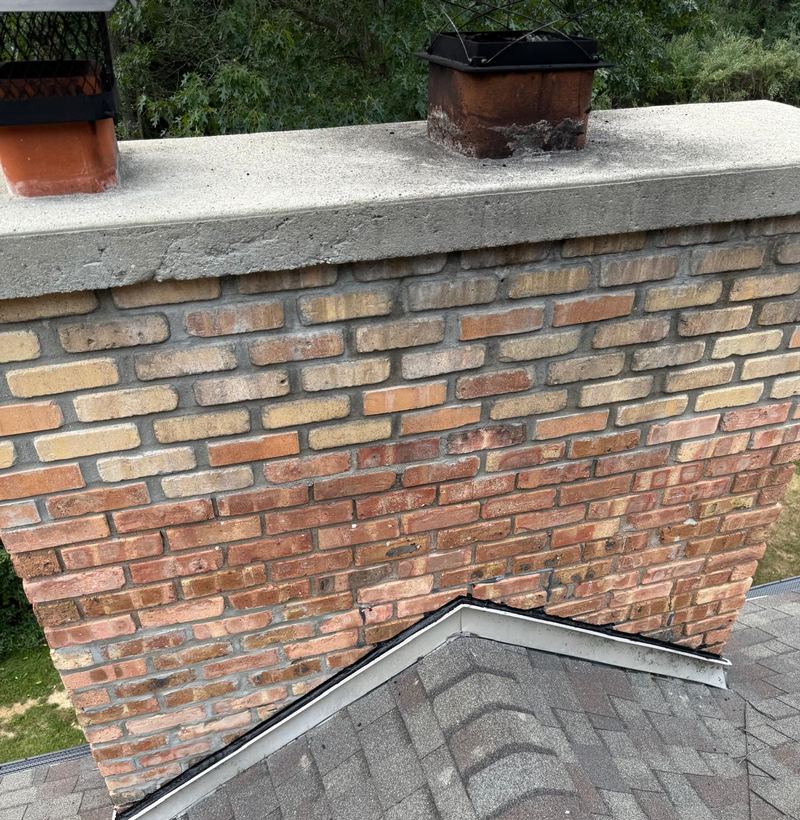
Flaking and cracked brick
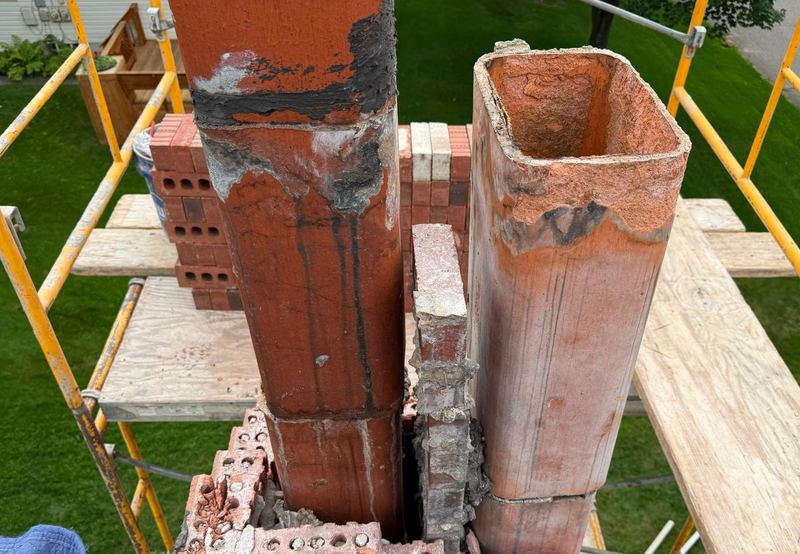
Patching a brick whose face has flaked away doesn't last. We cut that brick out and set a new one in its place, matched for size and color.
Chimney shoulders
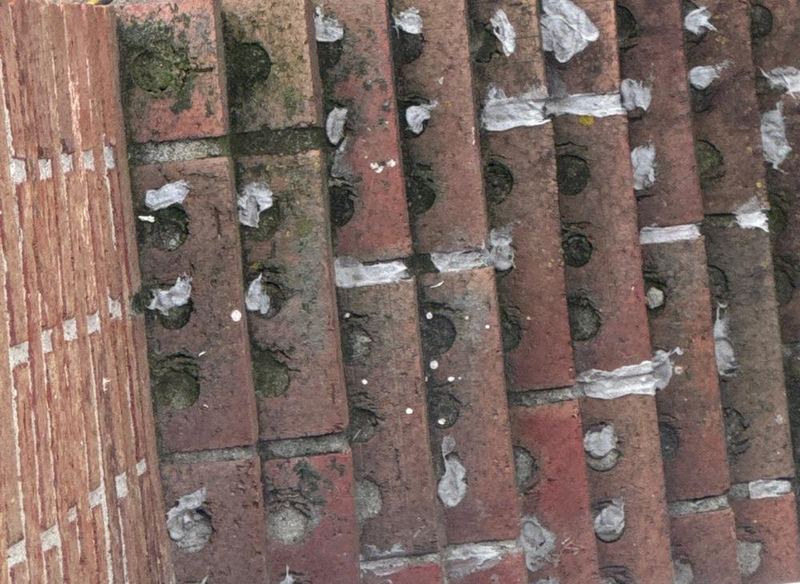
On an outside chimney, the shoulders are the sloped steps where the chimney gets narrower. Water sits on them, so their brick and mortar wear out faster than the rest. Shoulder repair runs $400 to $1,400.
What sets the price
The number of joints that need work, the height of the chimney, how easy it is to reach, and how many bricks have to be replaced. A one-story chimney with worn joints near the top sits at the low end. A tall chimney that needs scaffolding and new brick sits at the high end.
Waterproofing afterward
Once the new mortar has cured, a breathable masonry water repellent can go on to slow down how much water the brick soaks up. It isn't paint or a sealer, and it won't fix open joints, which is why it goes on after the repairs, not instead of them.
Signs the mortar is going
- Mortar you can scratch out with a key
- Gaps or holes in the joints
- Brick faces flaking or popping off
- White, powdery staining on the brick